

Colorectal surgery and colostomy: when can you avoid a stoma?
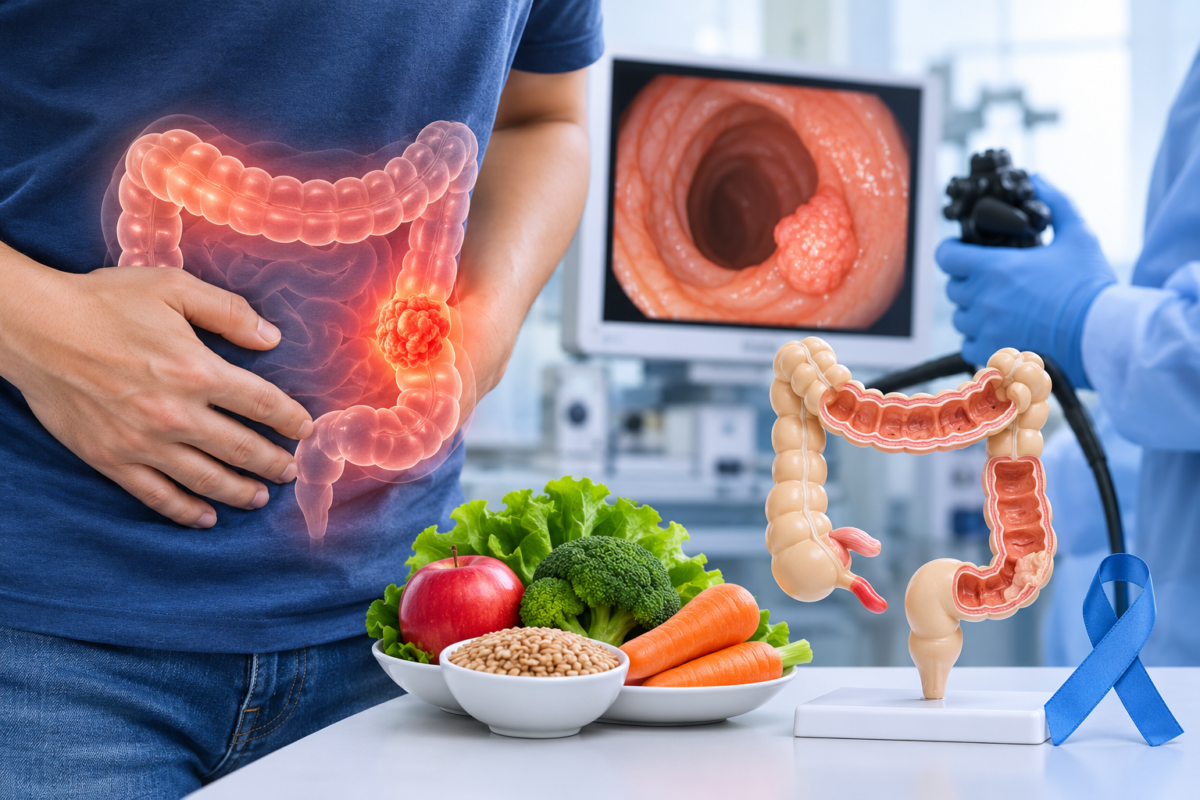
Colorectal surgery has changed a great deal in recent years. In many cases, a surgeon can now remove the tumor and still preserve normal bowel function, so a colostomy is not always necessary. Colorectal cancer is the third most commonly diagnosed cancer in the world and the second leading cause of cancer death, according to Global Cancer Statistics 2026 from the American Cancer Society and the International Agency for Research on Cancer. Outcomes get better the earlier the disease is found.
The risk rises with a diet high in red and processed meat, low fiber intake, obesity, inactivity, and smoking. It also rises with a family history of the disease or a history of polyps. A diet built around vegetables, fruit, whole grains, and balanced home-cooked meals, with less fast food and processed foods, helps lower it.
How can colorectal tumors be detected early?
Start by watching for any lasting change in bowel habits. These signs deserve an examination:
- Constipation or diarrhea that goes on for weeks
- Blood in the stool or around the anus
- A feeling that the bowel has not emptied completely
- Recurring abdominal pain
- Unexplained weight loss
- Constant tiredness or anemia
These symptoms do not always mean a tumor. Hemorrhoids, an anal fissure, irritable bowel syndrome, and inflammatory bowel disease can cause them too. The common mistake is to put any rectal bleeding down to hemorrhoids without an examination, and in many cases that delays the diagnosis of a tumor. The doctor usually orders a stool test and some blood tests, then decides whether a colonoscopy or imaging is needed.
You should not wait for symptoms, either. A routine colonoscopy finds polyps before they turn into tumors and lets the doctor remove them early. The doctor setdeterminese agestarting aged how often to repeat it screeningsed on each person’s risk factors and family history.
Why does early detection change the outcome of treatment?
A tumor caught early is small and still confined to the place where it started, which makes surgical removal more likely to succeed. Over time, it can grow into nearby tissue, and its cells can travel through the lymphatic system or the blood to other organs, most often the liver and the lungs.
Once the disease has spread, the treatment plan becomes more complex. Patients usually need surgery combined with chemotherapy or radiation, depending on the type and stage of the tumor. A tumor found early offers a higher chance of cure and calls for less extensive treatment.
What is new in colorectal surgery?
Today the surgeon aims to remove the entire colon or rectal tumor along with its related lymph nodes, reconnect the bowel, and keep the anal sphincter muscle intact whenever the location and spread of the tumor allow. Tumors in the lower rectum used to require a stoma in the abdominal wall to divert the stool.
Now, in selected cases, surgical staplers make it possible to join the colon to the anal canal even when the tumor sits close to the anus, with the muscles that control bowel movements left undamaged. The decision depends on where the tumor is, how large it is, how far it has spread, and whether it can be removed with safe margins. Every case is different.
Can you avoid a colostomy?
A colostomy is a surgical opening in the abdominal wall through which stool passes into a collection pouch. Some patients need one after rectal tumor removal, either temporarily or permanently, depending on the operation and their condition.
The difference between the two types matters. A temporary stoma is usually created to protect the surgical connection while it heals. It is then closed, and normal bowel passage returns after the doctor reassesses the patient. Avoiding a stoma altogether is possible in many cases thanks to modern reconnection techniques, but only the surgeon can decide, after an examination and imaging.
How is a high anal fistula diagnosed and treated?
The tract of a high or branching anal fistula runs close to the sphincter muscles that control bowel movements, so it needs an accurate diagnosis before a treatment is chosen. Diverting the stool to the abdominal wall was used in some cases in the past, but it does not close or cure the fistula on its own.
The modern approach begins with a clear map of the fistula tract and how it relates to the muscles. A pelvic MRI and a 3D anal ultrasound provide that map. With it, the surgeon picks the procedure that treats the fistula and protects the sphincter muscles, which lowers the risk of affecting bowel control.
What causes fecal incontinence and how is it treated?
Fecal incontinence, the loss of control over bowel movements, affects a patient’s daily and social life. Common causes include:
- Damage to the sphincter muscles after earlier anal surgery, such as hemorrhoid or fissure surgery, or after a vaginal delivery with a tear
- Damage to the nerves that supply the muscles, caused by injuries or diseases of the lower spine
- Disorders of colon movement, such as chronic constipation, where stool builds up and then leaks
The problem can also appear in children with chronic constipation or with an enlarged colon linked to poor colon movement.
What are the latest treatments for Colorectal Tumors?
Treatment for Colorectal Tumors starts by finding the cause: is the problem in the muscle itself, in the nerve that supplies it, or in the function of the colon and rectum? When the muscle is torn, surgical repair is a suitable option, especially if the cause was an earlier operation or a childbirth injury. When the cause is nerve damage or poor colon movement, the plan changes according to the test results. That is why no single method works for every patient.
When should you see a colorectal surgeon?
See a doctor if you have unusual rectal bleeding, a lasting change in bowel habits, recurring abdominal pain, or weight loss with no clear reason. A recurrent or high anal fistula, or a loss of bowel control, also calls for a specialist evaluation to find the cause and choose the right treatment.
Book a consultation with Dr. Ali Shafik
If you have any of these symptoms, or a family history of colon tumors, do not put off getting checked. Contact Dr. Ali Shafik to book an appointment, have your condition assessed, and decide on the right next steps.

